Central Valley Nissan Transforms Customer Experience, Gives Service Advisors “Freedom of Movement” with Xtime

Emerging technology has changed the way businesses interact with customers in a variety of ways, from online to in-person. Central Valley Nissan in Modesto, California, was eager to introduce technology to the service drive in order to boost business. In doing so, they also found that Xtime’s solutions created a more modern, efficient and professional experience for both customers and dealership personnel.

After seeing another dealership use tablets in the service drive, John began to take a harder look at Central Valley Nissan’s own operations. With the idea of transparency as a tremendous trust-builder in business, John put himself in the customers’ shoes as he began to observe customer interactions at various points around the dealership. What he saw made him appreciate the merit of using technology to take care of the customers at every touchpoint, as well as creating an open dialogue.

https://vimeo.com/139391897

“A lot of what I was seeing was customers waiting by themselves at the advisor booth, then seeing the advisors out walking quietly around the customers’ vehicles,” said John. “And the customers were looking at the advisors like, ‘What are they looking at?’ What are they thinking about my car?’ But there was no real interaction there.”

Soon after, Central Valley Nissan turned to Xtime’s Engage.

AN EDUCATED CUSTOMER IS AN EMPOWERED CUSTOMER

central-nissan-john

"The way that we did business before Xtime was very impersonal and kind of transactional, Xtime helped us with a real, consistent process to get us into the digital age of dealing with customers."

Accurate information is the cornerstone of a business’s good reputation, and studies show that tablet usage in the dealership service drive immediately establishes trust between customers and service advisors. Before Engage, Xtime’s automotive customer retention tool, Central Valley Nissan advisors had to expend substantial efforts to ensure customers had all of the information they needed in order to make educated decisions on their vehicles. According to John, being able to take care of customer needs from a driver safety and vehicle longevity standpoint—as opposed to purely a sales perspective—was key to building lasting relationships.

“What we didn’t want was a customer saying, ‘Do I have a recall on my vehicle?’ and then us checking and saying, ‘Oh, yeah. It’s right here. We forgot.’ We would look really unprofessional if we did that,” said John. “If we bring that information out later, it looks like we’re just trying to sell them something they don’t need. [Engage] allows us to have a more informational process instead of us just selling stuff.”

Central Valley Nissan’s numbers speak to the success they’ve had since partnering with Engage. From April to June of 2015, Central Valley Nissan used Xtime to:

  • Boost total show rates to 64.9%
  • Increase average repair order (RO) value by $47
  • Capture 42.1% of appointments from online and mobile channels
  • Obtain a 57% online conversation rate

John believes that Engage has also positively influenced the way customers interact with Central Valley Nissan’s service managers and advisors.

“Xtime gives customers a lot of information before they even come in for service,” said John. “So [the products] are educating them on their needs also. And then we get customers on the drive with the advisors are they’re looking at the tablet, saying, ‘Oh, that’s my vehicle?’ They could see their name and appointment right there, so they know we’re professionally expecting them. And you can see the trust level there and their happiness with us being in the digital age.”
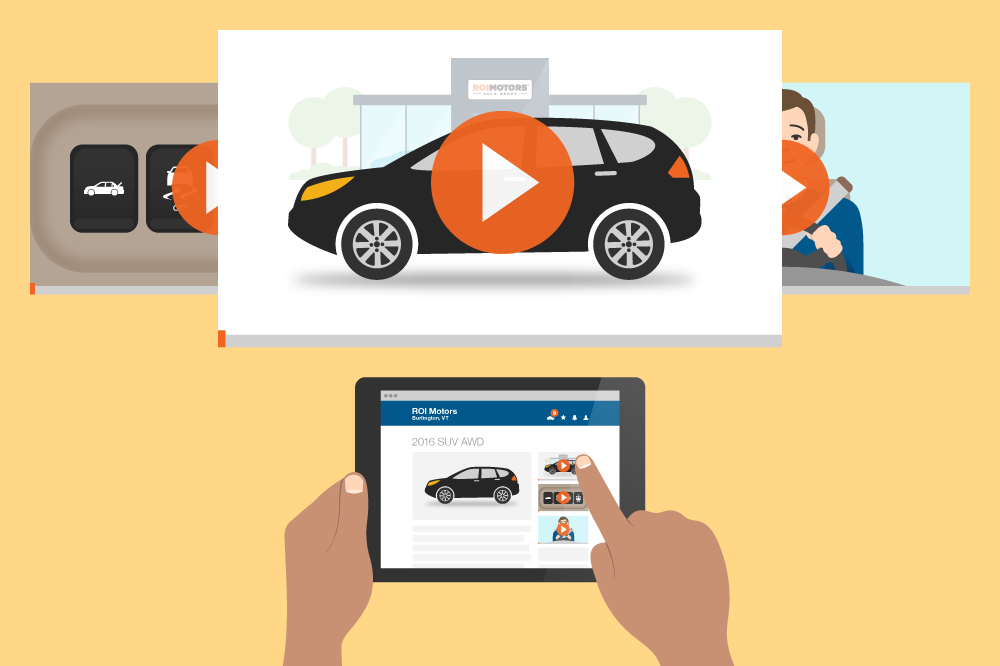

Car Buying Goes Virtual, Online and in the Showroom

Dealerships that haven’t invested in building out more accessible and informative websites have already felt the pinch of lower lead generations and few customer conversions, even amongst in-person vehicle shoppers. The better positioned your website is to answer shoppers’ questions and deliver the information they need in a media-rich environment, the better you’ve been doing.

This trend is only picking up steam, and dealership investments in online technologies will be increasingly important in the coming years.

In fact, recent research suggests that it isn’t just online but also in showrooms that shoppers are looking for digital and virtual experiences to enhance the car-buying process and reduce the need for what many see as high-pressure sales situations—including test drives.

Virtual Test Drives Blur the Line Between Online and In-person Car Buying

Some drivers are clearly looking for an online-only buying experience—a growing number of shoppers never set foot in a dealership until a price has been negotiated and the deal is ready to sign. They’re even eschewing in-person test drives in favor of “virtual test drives” that take place online via interactive videos. For these car buyers, your dealership’s online presence has to be media-rich and comprehensive if you’re to have any hope of even acquiring them as a lead, let alone closing the sale—your website may literally be your only point of contact prior to the moment you ink the deal.

For other twenty-first century automotive shoppers, though, the online portion of the purchasing process is a beginning they want to see transition seamlessly to the showroom. Car dealer industry research conducted by consulting firm Frost and Sullivan suggests that shoppers are increasingly looking for digital media and virtual test drive capabilities even in dealership showrooms—technologies in which leading dealerships in some markets are already investing.

The researchers predict the by the end of 2016, up to 30 percent of dealership space will be devoted to technologies meant to enhance the in-person car-buying experience, and to better integrate it with online shopping capabilities.

Dealerships that aren’t fully onboard with digital outreach and value-adding technologies that make the car-buying process more efficient, transparent, and intuitive are going to find themselves with a dwindling customer base. Though driving itself still takes place in the real world, the car buying process has largely gone virtual, and successful dealerships will have to keep up.

Guest author Collin Davis is the chief technology officer at Dealer Video Showroom, a Dealer.com Certified Technology Provider

How Quick Service and Fulfillment Are the Future for Online Auto Parts Retailers

The online parts market is more competitive than ever, and pretty soon price won’t be enough to keep you ahead.

With so much choice, customers can afford to be picky. That’s why customer service and fulfillment speed will become increasingly important in the future of auto parts retailers.

So what can you do to keep your online parts store moving quickly?

Customer service

In both quality and speed, customer service matters. It’s something you have full control over and an easy way to rise above the competition. Customers will always have something to ask you about, but you can reduce the amount of questions with a little preparation. Here’s how:

1. Create email templates for any commonly asked questions.

Whenever a customer emails your dealership with a frequently asked question, you don’t have to write a response from scratch. You can simply send out a template you’ve prepared in advance.

2. Write clear details in your parts descriptions.

Is the part for the left or right side? Does it come in a pair or not? By creating quality descriptions for the parts you sell, customers won’t have to email or call for clarification. Having high quality diagrams or photographs of car parts will also help to clear up any confusion.

3. Provide clear return and shipping policies.

Let customers know how your business operates with clear, easy-to-understand policies. It’s vital that these policy guidelines are easily accessible on your website, otherwise customers will get frustrated and call you with shipping and return questions.

And, Speaking of Shipping….

Customers are getting used to same day, next day, and two-day shipping—and for some, delayed shipping can be a deal breaker. This doesn’t mean you can’t keep up without rapid shipments, but it’s essential that you do what you can to smooth the process. To do so:

1. Process and ship your orders quickly.

If you wait a few days to fulfill online parts orders, you run the risk of receiving negative reviews and losing repeat business. To help you process orders more quickly, consider using a shipping manager that can automate label creation so you don’t have to manually copy and paste all of the order details back and forth between your order processing system and shipping carrier website.

2. Provide realistic shipping estimates.

Customers will get less antsy if they know when to expect their shipment. Include estimated shipping times along the shopping process, then provide a tracking number when the shipment goes through. Make sure this information is included in the customer’s confirmation email.

3. Assess your future strategy.

In the years to come, drop shipping will make it easier for dealerships to reach customers quickly and efficiently. As more auto groups set up centralized parts stores, dealers will get routed orders depending on stock availability and proximity to the shopper. If you are part of an auto group, now is the time to start planning your e-commerce strategy across all of your dealerships.

You can also think about your parts department’s efficiency on a more general scale. For example, are you properly staffed? As your business grows, you might start feeling the strain of a heavier workload. Make sure you staff appropriately, and that your staff is trained so you can handle higher order volumes.

A schedule or routine will drastically help your parts department run smoothly. Use checklists to help build a repeatable process that ensures your staff will fulfill orders quickly and efficiently.

With a little bit of work and organization, you’ll find it’s not too hard to pick up the pace at which you interact with customers and fulfill orders.

Guest author Amanda Oppenheim is the marketing manager at RevolutionParts, a Dealer.com Certified Technology Provider

Video Is Replacing the In-person Test Drive

You know your customers are relying more and more on information they find online before they ever set foot in your dealership. You’ve been seeing it firsthand for years. The industry’s been telling you for quite some time, and everyone’s seen the stats to support it. From social media to online car review services to dealership websites, the web makes up a huge part of the shopping process for today’s car buyers.

Recent research shows that online information gathering isn’t just a growing part of car buying; it’s actually replacing the traditional test drive.

According to the report, 16 percent of today’s car buyers make their purchase without once getting behind the wheel. That’s one in six shoppers who don’t even show up at a dealership until he or she is ready to sign. Video is the online medium people are turning to instead.

How Virtual Test Drives Are Running the Sales Floor

Neither video nor any other online experience could actually replace an in-person test drive. It’s important to actually drive a vehicle before making a purchase. But there’s no arguing with the fact that more people want video and fewer people want test drives.

In addition to the fact that a substantial portion of buyers are now opting to forgo a test drive altogether, a full third of car buyers surveyed only test drove a single model, and only took it out one time before making a purchase. Forty-nine percent spent less than half an hour test driving and otherwise examining a car in person before making what they considered to be an informed decision.

All of these figures show a clear upward trend compared to the first time a similar survey was conducted several years ago. Project that trend out a few more years, and you’ll have a majority of car buyers who have already largely, if not entirely, made up their minds before they pull onto the lot, let alone get behind the wheel.

For better or for worse, the move to trust video is happening. The question you need to ask yourself is is my dealership ready?

Guest author Collin Davis is the chief technology officer at Dealer Video Showroom, a Dealer.com Certified Technology Provider

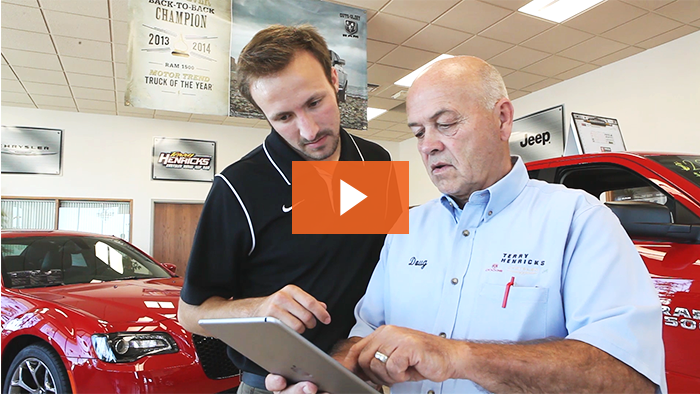
Terry Henricks Chrysler Dodge Jeep Ram

Terry Henrick's Featured Dealer

Terry Henricks – Featured Dealer

Terry Henricks is synonymous with business values, customer satisfaction, and now, digital strategy.

Family owned for the past 26 years, Terry Henricks Chrysler Dodge Jeep Ram is deeply committed to its customers. It’s no wonder that Chrysler has awarded the dealership with the highest customer satisfaction score in the industry. But with three Chrysler dealerships in the Toledo, Ohio, region, Terry Henricks’ sales started to slump despite its diehard customer base. It needed to make a change.

Embracing an “all-in” approach to digital marketing, the business partnered with Dealer.com to facilitate auto retail’s very best digital marketing products and services. With Dealer.com’s Website, Advertising, and Managed Services solutions helping, the dealership has bounced back, reaching a new audience and boosting its sales and service business – all while strengthening relationships with established customers. It’s why Terry Henricks continues to thrive. And it’s why it’s a Dealer.com Featured Dealer.

Six Basic Steps toward Service Appointment Setting Success

Phone calls are on the rise to both sales and service departments. The average dealer, however, only converts a little over 30 percent of its inbound service leads to appointments.

It’s difficult to calculate how much revenue your fixed ops department is actually missing out on, but it’s a good bet that one of your nearest competitors is reaping the benefits of your loss.
Effective call handling can increase conversion rates from an average of 30 percent up to 90 percent, meaning your dealership’s fixed ops department could be generating three times as much business without increasing its marketing spend.
We recently fielded an extensive study on how dealers nationwide handle inbound service calls and were able to pinpoint the most important phone skills that help service departments set appointments. We analyzed data across 2,464 phone calls and reviewed 21 common call handler behaviors to determine which ones are crucial to converting inbound leads into appointments. There are six key behaviors that, when successfully used, improve call-to-appointment conversion ratios from as low as 11 percent to as high as 90 percent.
One of the most startling pieces of data in the study is that nearly a third of the service department calls analyzed did not take advantage of these critical, simple tactics for converting calls to leads.
With this in mind, here are six crucial and basic steps for service appointment setting success:

1. Ask the caller “How may I help you?”

This obvious question was only asked 64 percent of the time on the analyzed calls.

2. Establish if the caller is a repeat customer.

Recognizing valuable repeat customers is good for business and saves time on the call. This, however, only occurred 62 percent of the time.

3. Identify the vehicle needing service.

Quickly identifying the customer’s vehicle helps the service department maintain control of the call and guide it toward an appointment. Call handlers did this only 69 percent of the time.

4. Obtain the caller’s full name.

Getting the customer’s first name helps build rapport while the last name is important for accurate record keeping. This only occurred in two-thirds of calls studied.

5. Ask about the caller’s additional questions/concerns.

This shows callers that their concerns are taken seriously, and it’s an effective way to identify upsell opportunities. Only 6 percent of the calls studied included this crucial step.

6. Determine the caller’s timeframe for service needs.

This is the best way to get callers to commit to an appointment, but only 65 percent of call handlers did this on calls analyzed.

As you can see, these steps aren’t difficult and add only a negligible amount of phone time, offset in the form of customer loyalty and upsell opportunities. Take the time to make these six basic steps part of the routine of every service appointment call and start seeing immediate results.

Guest author Adam Kottler is the Director of Advisory Services at CallSource, a Dealer.com Certified Technology Provider.

Five Simple Steps to Start Selling Parts Online

Dealer.com welcomes guest blogger Amanda Oppenheim, Marketing Manager of RevolutionParts, part of the Dealer.com Certified Provider Program.

A modern automotive retail website is much more than just a marketing channel.

It’s a rich resource for auto research, a compendium of cars with a purchase process that can begin online, and an opportunity to engage and connect with customers to build brand loyalty. It’s a critical dealership tool that should provide a shopping experience that empowers customers, helping them make the choices that will get them the right car, and your dealership the highest profits.

But the car is only one type of product your dealership sells. You’re dealership may also have a parts department, the unsung hero of your business that provides a reliable source of revenue. Original parts wear out and equipment needs to be replaced. Customers want to buy high-quality OEM replacements so they head to your parts department to make a purchase.

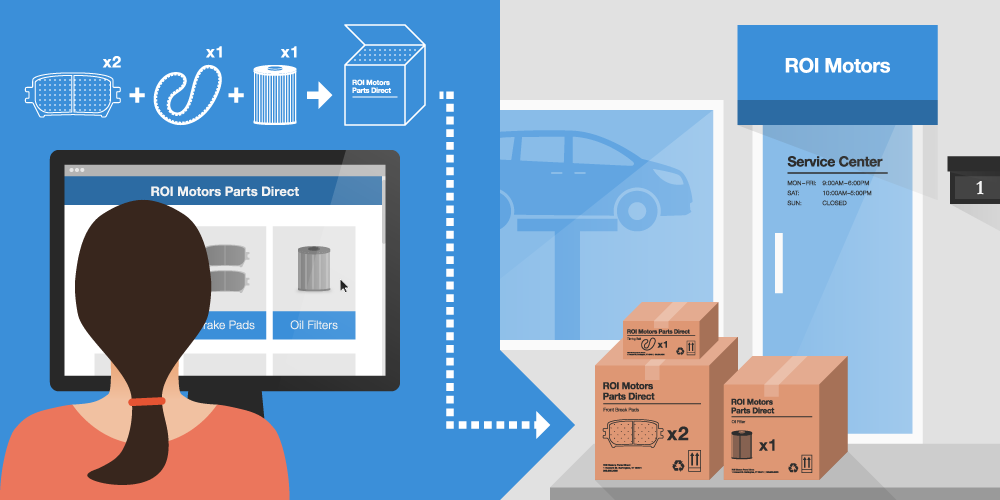
But what if you could bring your parts department to your customers? There are vendors who provide e-commerce solutions that incorporate a parts store directly into your dealership website.

With an online parts store, you can: A) replace your website’s existing parts request form with a user-friendly parts and accessories catalog; B) sell parts on your existing dealership website; or, C) create a separate custom parts website in order to sell your merchandise nationally. Parts e-commerce can significantly increase profits while providing customers with a convenient way to buy automotive parts. And it’s easier than you might think.

Here are five steps to get your online parts store up and running:

1. Assess your resources and set goals.

Is your goal simply to get started with e-commerce and receive a handful of extra orders each month, or do you want to aggressively grow the volume of your parts sales? Or maybe you aren’t ready to sell online yet but want to improve the customer experience on your website. Once you determine your goals, you can assess your staff size and marketing budget to decide the best path to putting your parts department online.

2. Evaluate and select a parts e-commerce solution provider.

If you evaluate your resources but still aren’t quite sure of which online channel is best for your dealership, ask e-commerce providers for guidance. E-commerce providers supply the online parts and accessories catalog, shopping cart, order processing, shipping tools, and many other helpful features. They will also completely handle the online implementation of your parts store so you don’t have to worry about the technical details. The e-commerce provider will be critical to your success, so thoroughly do your research and view online product demonstrations. You can find a parts e-commerce checklist here with 50 questions to ask vendors and helpful tips for evaluating e-commerce platforms.

3. Configure administrative settings.

Your e-commerce provider will help you set up your shipping methods, tax settings, payment gateway, and other back-end settings necessary to run your online parts business.

4. Customize your online parts store.

If you are plugging a parts store into your existing site, you won’t have to do much customization. If you are selling merchandise nationally on a standalone site, then your e-commerce provider should create a custom website design and logo for you.

5. Start selling.

Once your parts store goes digital you will start to see online sales and need to fulfill and ship these orders. You can write original product descriptions for best-selling parts to increase organic traffic to your site. Google product listing ads are another way to increase traffic and sales.

An online parts department is much easier than you may think and can take as little as one day to set up. Having this online revenue channel will grow your market share and profit, and will significantly improvement the parts-buying experience for your customers.

Understand How Integrated Digital Ad Campaigns Can Optimize Summer Sales Strategy

Summer is critical for dealers. Nationwide, dealerships typically enjoy as much as 35% of their total annual sales volume during the summer months, and they will significantly increase investment in digital advertising during the summer months compared to any other period of the year.

Dealer.com and Google data reinforce the value of this investment. Google data shows a steady rise in vehicle search volume from April through September, and traffic to Dealer.com Websites also jumps by over 20% in the summer when compared to spring traffic levels. When combined with nationwide sales volume, which typically peaks around August, the data reveals a clear trend: in-store sales follow online demand.

Three Strategies to Help You Turn Up the Heat on Sales This Summer

New car sales are on pace to achieve 17,300,000 units by the end of 2015. This is due, in part, to pent-up demand from shoppers who were inclined to stay indoors during this past winter’s relentless weather – a potential recipe for summer 2015 to be the busiest in automotive retail history.

One thing is for sure: the competition for that demand will be intense. There are steps, however, that your dealership can take to give it an edge over the other guys as you vie for shoppers’ attention.

It starts with your advertising strategy.

Let’s examine three ways to adjust your digital advertising now to capitalize on this summer’s sales heat:

1. Align the demand you generate with your lead capacity.

Search engines and research websites are now flooded with queries. This interest can translate to increased floor traffic and sales, depending on which dealerships stand out and best engage the attention of qualified buyers.

With so much competition out there, it’s a shoppers’ market. To engage the most qualified shoppers, your ads will need to be compelling, timely, and relevant.

To begin, test your relevance to local shoppers by following these steps:

– Visit the Google Ad Preview Tool.

– Enter the search query “[Make][Model] Near Me”.

– Make sure to check the ‘location’ section so your local market is targeted.

Your ads may not appear, even after several test searches, and even if you’ve been investing heavily in paid search. The likely culprit for this is a surge in demand that is lowering your overall coverage.

But don’t fret. A surge in demand means there are more high quality sales leads available. Use this opportunity to drive these motivated shoppers to your dealership by turning up the dial on your ad spend (to even the ad budget scale, consider repurposing dollars from underperforming media spend). Consult your advertising specialist to determine and match the amount of leads your dealership can handle with the current share of demand you are capturing, and adjust accordingly. Your sales staff needs to appropriately work the flood incoming new leads.

2. Configure a holistic digital ad strategy.

Paid search ads are a tremendously valuable advertising mechanism, but they’re capturing a lot of shoppers who have already completed at least some of their initial research. What about the other 95 percent of time that in-market shoppers are spending on their smartphones, tablets, and laptops everyday?

Using metrics like searches containing “near me,” for example (a phrase that’s growth has jumped 34 times in the past four years), shoppers are identifiable through means completely separate from paid search engagement. Ad campaigns can be configured to cater to qualified shoppers from a proprietary list based not on their name but on digital/offline transactions and expressed interest. Talk to your advertising team to get this strategy going.

3. Ensure your landing pages are ready to engage your new traffic.

How far down the process can buyers proceed without speaking to your sales professionals? Shoppers can “dive” deeper into your store, and much closer to a sale, if you:

– Display accurate, dealer-controlled payments and pricing for new and used vehicles—including taxes and fees where available.

– Provide loan and lease calculations using APRs from your selected lenders, manufacturer residuals, and incentives.

– Include your dealership reserve and rate mark-up.

– Generate instant trade-in offers that are vehicle and dealer-specific.

– Drive profit-ready finance leads through short form inquiries or full credit applications.

– Integrate financing and trade-in into vehicle inventory workflows.

– Present insurance and aftermarket options.

These options can greatly increase your dealership’s ability to take action with those leads and close more deals. It could be the difference between a 20 versus 35 percent lead-to-close ratio.

We wish you continued success this summer! Don’t be afraid to drop us a line with questions or comments.

Joe Mescher is a Media Sales Director at Dealer.com

Three Ways Your Dealership Can Attract Millennial Car Shoppers

Young people aren’t driving differently. They’re shopping differently. And that’s a good thing.

The automotive industry is increasingly focused on the car-buying habits of the millennial generation: car buyers born after 1980. Dealers have often been led to think that this set isn’t as interested in vehicles as prior generations. They have more of an emotional connection with consumer electronics than with cars – so the theory goes – and they favor car sharing over car owning. And since they increasingly live in cities, they prefer riding a bike or using public transportation. This line of thinking has taken hold, becoming part of the “conventional wisdom” in the industry.

But what if it’s wrong?

At this year’s meeting of the National Automotive Dealers Association in San Francisco, a group of executives from MTV presented a new reality: one in which “Millennials love their cars for the same reasons they love their phones.”

The study involved 3,610 millennials between the ages of 18 and 34, and revealed that this generation may be more interested in cars than their older counterparts. For example, 70 percent of millennials enjoyed driving versus 66 percent of generation Xers and 58 percent of baby boomers. The study also revealed that 76 percent of millennials would give up social media for a day rather than their car, while a whopping 72 percent would give up texting for a week rather than be without their car.

The study’s findings also analyze the effectiveness of millennial-focused product development and marketing. The big takeaway? Cars aren’t the problem. Eighty-two percent find buying or leasing a new vehicle “exciting.”

Instead, the real issue among millennials is an outdated and unsatisfying purchase experience. Seventy-one percent of those surveyed said they found ratings and comparisons among different vehicles to be “often unclear.” In addition, 83 percent said they wish car brands would explain how vehicle prices are set while 87 percent said they feel the car-buying process should be more “fair.”  Finally, 80 percent said that buying or leasing a new car should take less time.

Adapting to these trends means delivering increased efficiency and transparency into the retailing process, beginning with your website. Here are three great first steps:

1. Maximize Searchability

Millennials are accustomed to readily available information. They want to learn everything they can about vehicles in which they’re interested before ever setting foot in a dealership. Websites that feature “trim-based” search and other vehicle search tools allow them to get information easily – whether it’s seeing the differences among the various trim levels on a vehicle, or narrowing down a shortlist based on price, miles per gallon, or horsepower.

2. Invest in Transparency

As shown in the MTV study, millennials trust digital experiences; they just don’t always trust dealerships. Bridge that gap through honest, transparent digital retailing experiences on your site. Digital Retailing allows customers to get a credible quote for their trade, or take an active role in the deal structuring process by modifying things like the lease term and down payment or viewing available protection plans. Not only does this insight deepen a visitor’s level of overall site engagement, it increases his or her trust. Both of those benefits are invaluable in the emerging digital landscape and generating automobile leads.

3. Allow Shoppers to Initiate Deals Online

While the showroom remains fundamental to the retailing experience, millennials increasingly seek efficient transactions. That’s part of what makes online deal initiation invaluable. By allowing shoppers to initiate their purchases online, dealers show their younger customers that they respect their time and autonomy. Additionally, by showing customers how much time they’re saving, dealers build excitement about the transaction and the showroom experience.

Having spent my professional career in the automotive industry, and having developed a passion for the art and science of car design, it’s exciting to consider a future where millennials are just as excited by cars as they are by consumer electronics. It’s just as exciting to know that, with a few simple strategies, dealers can help ensure that this new generation of customers is just as excited to head to the dealership to buy their cars as they are to drive them.

James Grace is Director, Product Management – Analytics at Dealer.com