Learn How Top Dealers are Thriving

Implement the secrets of high performers so you can work smarter, not harder, for a more efficient and profitable sales department.

In every industry, there are top performers who separate themselves from the pack by achieving results that go above and beyond what others manage to accomplish. But, they also separate themselves through their daily actions, by differences in the way they approach operations. These discerning dealers are thriving — and they’re sharing the secrets of their success.  

Instead of staying stuck in a rut of past practices, these dealers are adapting to changing customer preferences and investing in innovative digital sales tools that maximize productivity. 

Take an in-depth look at how some savvy dealerships managed to thrive during a down economy to become both more profitable and more efficient.  

4 Best Practices to Improve Customer Experience

For generations, companies have operated under some version of the age-old rule “the customer is always right.” Today, customers aren’t just right, they are in control. They now shop at their convenience, receive personalized recommendations, and buy whenever and from wherever they want. Accustomed to this level of service, vehicle owners now expect to have customer-centric experiences in your dealership service department. To earn their initial business and to bring them back repeatedly, your dealership needs to adhere to a set of best practices for improving the customer experience through convenience, transparency, and communication.

Best Practice 1: Increase Convenience with Service Pickup and Delivery

With many consumers feeling busy, overbooked, and out of time, the idea of service pickup and delivery appeals to 89 percent of vehicle owners. Specifically, they want the option to schedule automated, efficient concierge service right through your online scheduler. Dealerships that already offer service pickup and delivery have found it’s an effective tool for improving the service experience and increasing customer satisfaction. In fact, 86 percent of customers that use pickup and delivery report being satisfied with their experience (2020 Cox Automotive COVID-19 Consumer Impact Study, Oct 15-17).

Best Practice 2: Improve Transparency with Picture- and Video-Based Communication

The majority of vehicle owners lack the knowledge and experience to understand what’s going on under the hoods of their cars. As a result, they may find it difficult to trust the recommendations of service advisors. Picture- and video-based communications introduce transparency into dealer-customer communications, allowing advisors to show a problem and educate customers on why a recommended repair is needed. Dealerships using media-enhanced communications are maximizing revenues from service interactions with a 24 percent increase in ASR conversion and a 70 percent increase in the average dollars per repair order (Cox Automotive Data, 2021).

Best Practice 3: Improve Communication with Texting 

Dealerships aiming to improve the customer experience need to go beyond good communication and reach customers through their preferred channels. For many customers today, that channel is text messaging. According to research, 89 percent of consumers want to use text messages to communicate with businesses (Twilio). With text messaging, your service employees can communicate service updates in real time from a single system and they won’t have to play phone tag or return to their desks to communicate with customers.

Best Practice 4: Increase Convenience with Flexible, Online Payment Options

To improve customer experience, service needs to be great all the way through to final payment. With today’s technologies, your dealership can now accept credit cards online or on in-dealership tablets and desktops so customers can truly pay at their convenience. You can improve the experience even more by getting customers in and out faster with emailed or texted payment requests and receipts.

In today’s retail environment, the customer is at the center of most transactions. As a result, vehicle owners have high expectations for the service experience offered by your dealership. By implementing a proven set of best practices aimed at improving convenience, transparency, and communication, your dealership can increase revenues and earn repeat service business from customers.

Download our eBook to learn more about how your dealership can improve retention and increase profits by implementing a digital service experience.

Ready to see how better technology leads to loyalty and revenue? Book an Xtime demo here.

Spectrum: Maximizing Profitability with an Efficient Inspection Process

Service Departments make their profits by selling time and time is a commodity we cannot produce more of. Explore the efficiencies you can gain for your dealership service department with Xtime Spectrum. Join Performance Manager Gerald Gregory as he discusses how to maximize profits with an Efficient Inspection Process where he will provide industry insight and best practices.

Avoid the DIY-DMS with a True Partner

It’s easy to assume technology is everything. It’s critically important. And in the last year and a half, dealers like you leveraged technology, processes, and data to accomplish the impossible. In fact, even during the pandemic, buyer satisfaction rates improved.

But, you know (and your people do too) that technology without a human touch leaves your buyers wanting. On top of that, standing up a new system on your own makes everybody’s life miserable. Your team suffers. Your productivity dwindles. Yet, such is the cost of forward progress, right?

Or is it?

Shiny Bells and Whistles

New technology is enticing. And there’s a reason for that. Your buyers’ habits are constantly changing. And you want to be ready to meet their needs. According to a report, 84% of franchise dealers expect to increase sales in 2021. So there’s a better than average chance you’re already scoping out your next tool or system. Yet, often, dealers face a new technology upgrade with little to no support from their vendors. Tracy Fred, Vice President of Dealer Sales and Service Solutions for Cox Automotive said in this recent interview, “With the convergence of technology, processes, and data, dealers are left to figure it out on their own in most cases. It’s difficult to do that in a silo.” That’s unfortunate. A DMS transition impacts everyone at your dealership. When it comes to people, process, and data, “You need people who can help you connect those three things. That’s why Dealertrack has a team of Performance Managers.”

A Partner in Your Corner

Gaining consensus for a new DMS can be a battle on its own. So, dealers are ready to move on and get back to business once they’ve made the decision to transition. But, without a true partner in your corner, you may be walking into a new set of issues such as training, adapting to new workflows, and overcoming objections. And often, it’s the little things you weren’t prepared for that can derail a new tech transition. According to seasoned Performance Manager, Mike Panozzo, “Yes, you’re changing technologies, but it’s about more than that.” Outlined in his Four Steps for a DMS Transition, Panozzo explains that a new DMS is really a new mindset shift that, many times, dealer partners are unprepared for. That’s why having a Performance Manager, who can take on change management challenges like turning dissenters into advocates, can make a huge difference. Training new management as you hire and turn over team members over time is also a key benefit to having an ongoing partnership.

Connecting the Pieces

The long journey to success is filled with twists and turns. It’s also filled with new partnerships, integrations, and adaptations. As your business grows, you’re going to find ‘flexibility’ is your greatest strength. With an average of 10+ years in dealership management under their belt, each Performance Manager at Cox Automotive has been in your shoes. They know where you’re coming from. And their sole job is to learn where you’re headed—and to help you get there. With over 160 approved Opentrack vendors who work with Dealertrack DMS, unlocking the data within your dealership and integrating new technology helps you remain flexible and adaptable. With deep knowledge of how the DMS operates and functions, your Performance Manager helps you manage each integration.

As you adapt to new digital trends, your DMS helps analyze data and aligns business goals with changing customer wants and needs. And although modern DMS technology is much easier to use and much more intuitive than it used to be, it helps to have someone in your corner. Someone to deliver training, offer feedback on areas of opportunity and share tips and tricks that go well beyond traditional tech support. Your Performance Manager is that trusted partner. They’ve been there. Managing metrics, aligning key business objectives, and crafting that superior, personalized experience for your customers is in their very nature.

Your Performance Manager is invested in your success. As your dealership looks to the future—no matter what challenges are in store—they’re prepared to meet them. And they have unique insights that can help you leverage the DMS to achieve higher sales. Discover the 6 ways your DMS is a true profit driver in The Dealer’s Guide to Maximizing Profit with the Right DMS Partner.


The Ultimate Guide to Modern Sales Training

How to train your dealership on digital processes.

The road to the sale is changing. Consumers are demanding a more modern way to buy cars, and dealerships are adapting to offer a more flexible, hybrid online and in-store sales experience. But as with any new process, you have to bring your entire team up to speed.  

In our new eBook, you’ll find resources and strategies to train your staff on your new digital sales processes and equip them with the tools they need to succeed in the new sales environment. You’ll discover how to train them in key areas, including:  

  • New ways to use technology to drive efficient digital processes 
  • How to prioritize leads using data-driven assessment  
  • Best practices for modern customer communications  

Get your free eBook and start training your team to succeed with digital sales processes. 

If a Picture is Worth a Thousand Words, What’s a Video Worth?

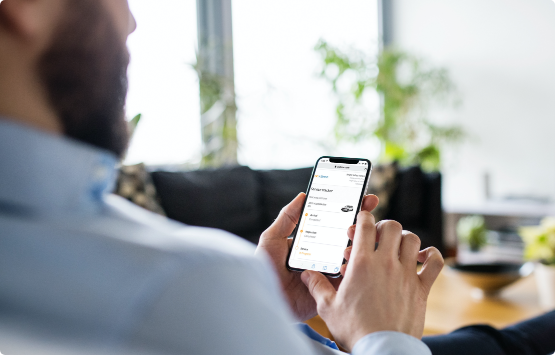
Quickly and easily capture video and images with Enhanced Multi-Media, an add-on feature available with Xtime Inspect. Show your customer what the technician sees by attaching media to an ASR before you text or email it, or advisors and technicians can text media directly to the customer.

This provides an opportunity for your customer to interact with your service department from anywhere and easily understand the need for the recommended repairs while viewing pictures and video on their phone or device. You are increasing trust through transparency so that you can boost dollars per repair order and support the kind of digital experience your customer expects.

And you are making it easier and faster for the customer to say yes, with 49 percent of ASRs that include photos and videos approved in the first 15 to 30 minutes of receipt versus 31 percent with no photo or video.

Ready for faster approvals and more dollars per RO in your service department? Demo Enhanced Multi-Media.


5 Video Advertising Strategies to Drive Customer Engagement

video advertising strategy

In today’s market, you need to be able to sell everywhere your customers want to shop. It may come as no surprise; studies show your customers are spending more time online. Consider that Akamai, the world’s largest content distribution network, is running 67% more web traffic than normal, and average daily mobile traffic has jumped from 2.5 hours per day to 4  hours. 

With more eyeballs going to the digital environment, consumption of video content is also increasing. Each day, consumers view 4 billion videos on Facebook and 5 billion on YouTube. Importantly for digital advertising, video-hosting platforms and media providers engage in-market shoppers. Nearly 4 million automotive videos are viewed on YouTube every day. 

Video is a brand awareness channel that influences the viewer’s digital behavior. In simple terms, when in-market shoppers are frequently exposed to video assets of a specific vehicle model, they are more likely to search for it. This powerful tool has the reach, targeting capability, and content richness to drive more traffic to your Digital Storefront or automotive service marketing, and ultimately help you sell more of the advertised model or service.

All things considered; it is essential for the modern dealer to cultivate a robust video advertising strategy. Here are some branding and multi-channel strategies to employ today to leverage the increase in video consumption and the automotive vertical.

1. Lead with Brand, Mobile First

Capture the viewers’ attention immediately with a strong opening. Different channels will have different criteria for video ads, such as time limits of 15 seconds, and some may allow the viewer to skip after 5 seconds. The start of your video should be engaging and recognizable, whether it’s your logo, your Why Buy, or a key message.

While developing your content, keep in mind that over 50% of traffic is from a mobile device. Think like a smartphone user, considering all the distractions they may be encountering, and select your ad formatting to length to overcome these obstacles.

2. Data-Driven Targeting

Harness your first party data and evolve your audience segments. Whether this first party data is from the media provider, or it’s data from within your dealership website, both are gold mines of opportunity. Your most qualified audience is made of consumers who have already been to your website, so start with a retargeting effort to maximize that targeting capability. Follow along with other audiences depending on their segments and goal-based priorities after that.

3. Multi-Channel Message

Develop a consistent message that is coherent with copy in your website landing page and brand marketing. Be sure this message should be clear and concise. You will build perception of brand value by repeating it in the ad copy of the video and across other channels, including email, banners, and more.

4. Integrated Marketing Approach

Avoid the silo mentality, and work to ensure your channel campaigns are integrated together. For instance, a well-planned Search Engine Optimization (SEO) program can be leveraged to drive more traffic from a video advertising campaign as well as other active channels, such as paid search. As you launch brand awareness opportunities, like video advertising, you will get more traffic and increased exposure on the other channels that are running.

5. Media Spend Allocations

It’s important to talk about budget when addressing advertising strategy. To know if you’re getting your money’s worth, develop a hierarchy of needs based on your goals. For instance, if your goal is a cost per action KPI, then you need to prioritize your channels that have the best return, such as retargeting. Historically, we’ve seen retargeting efforts have the best cost per action, depending on your cookie pool.

Branding channels are imperative in a diversified media plan. Branding from video advertising supports additional website engagement from multiple digital channels. And don’t be afraid to challenge the status quo. If you’re currently running a traditional cable TV budget, then test it on Connected TV and gauge the performance.

One of the opportunities that Connected TV offers is more reporting capabilities. Digital marketing supports a wide range of KPIs and deep, granular reports to identify success. This level of information allows you to improve what’s working, expand on what’s working, and pull down what isn’t. Over time, you will see more cost efficiencies on overall media spend.

Dealer.com acts as your dealership’s very own automotive advertising agency, powering consumer experiences from anywhere. Deliver the right message from your Digital Storefront to every customer, wherever they are, with video advertising from the industry’s only complete digital marketing solution.

*Source: Think With Google